



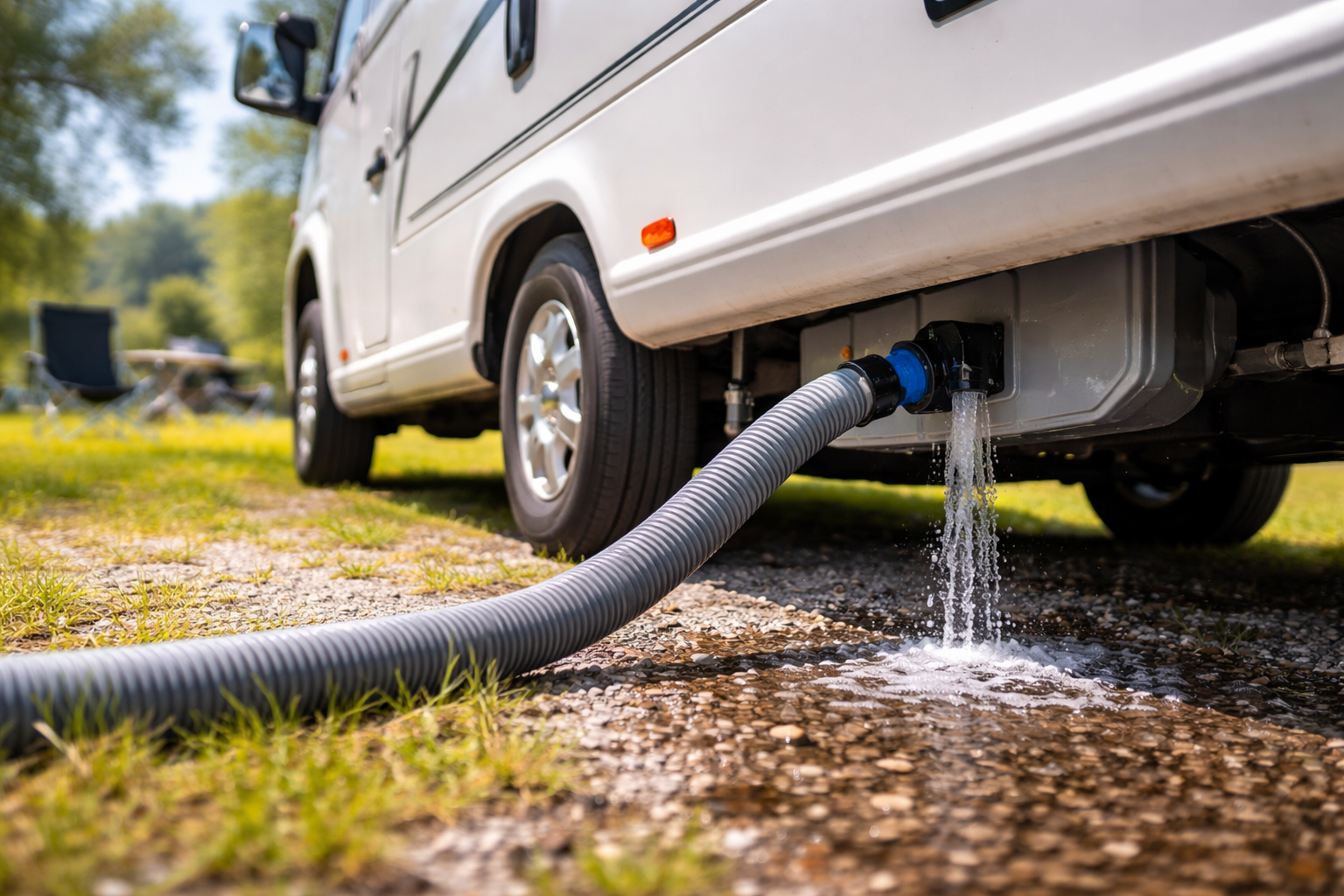
Greywater in motorhomes is generated during showering, washing dishes, and handwashing. The wastewater collects in the greywater tank under the vehicle floor and contains soap residues, grease, and food leftovers. Unlike blackwater, which is wastewater from the camping toilet, greywater is less contaminated but still must not be disposed of simply in nature or in drains.
Proper disposal is a fundamental part of motorhome life. Knowing where and how to correctly drain wastewater helps avoid fines and protects the environment. At the same time, with the right products and a well-thought-out toilet solution, the entire wastewater management in the camper can be significantly simplified.
What is greywater and what is blackwater?
When camping, two types of wastewater are produced, which must be collected and disposed of separately. Greywater refers to wastewater from the shower, sink, and kitchen basin. The greywater tank holds between 30 and 100 liters depending on the vehicle and is usually located under the vehicle floor.
Blackwater, on the other hand, comes from the toilet cassette and contains feces as well as chemical sanitary additives. At the disposal station, both types of wastewater are drained separately because blackwater requires different treatment than greywater.
Using a separating toilet fundamentally changes this equation. A dry separating toilet operates without water and chemicals. Solids are collected dry, and urine flows into a separate container. This means no blackwater is produced, and the toilet cassette is completely eliminated. The only wastewater source left in the motorhome is the greywater tank.
Where can you dispose of greywater?
The safest way to dispose of greywater is at official disposal stations, also called VE stations (supply and disposal) or dump stations in camper jargon. There, you can drain the wastewater in a controlled manner into a ground inlet.
You can find disposal stations at the following locations: campsites almost always offer a VE station, often included in the price. Many motorhome parking areas in Germany and Europe also have disposal options, sometimes for a small fee.
Gas stations, especially abroad in countries like France, Spain, and Portugal, are often equipped with disposal stations. Even supermarket chains like Intermarché in France offer VE stations in their parking lots, so you can drain wastewater and do your shopping at the same time.
Apps like Park4Night or the ADAC Camping app help you find the next disposal station on the go. The directory from Reisemobil International also lists disposal stations throughout Europe.
Draining greywater: Step-by-step guide
At the disposal station, first look for the ground inlet, an opening or channel in the ground designed for draining greywater. Maneuver your motorhome so that the wastewater outlet on the vehicle floor is directly above the ground inlet.
Open the wastewater valve on the motorhome. Depending on the vehicle, the drain valve is located inside at the rear or outside under the camper. The greywater flows by gravity into the ground inlet. Wait until the wastewater tank is completely empty, then carefully close the valve again.
It is not always possible to position the vehicle exactly over the ground inlet. An extension hose with a funnel solves this problem. You slide the hose under the drain outlet and lead it to the ground inlet. Many disposal stations provide such hoses. For regular trips, having your own hose in the storage compartment is worthwhile.
Leave the disposal station clean after draining. A rinse hose is usually located near the fresh water connection.
Greywater in drains or nature: Why it is prohibited
Draining greywater into street drains, meadows, or forests is prohibited in Germany. Penalties can be up to 5,000 euros depending on the federal state.
The reason is simple: not every drain is connected to the sewer system. Many street drains serve only as rainwater outlets and discharge water untreated into natural waters or retention basins.
Greywater from the motorhome contains surfactants (detergent substances) from dish soap and shower gel, grease, food residues, and other organic materials. These substances harm soil and groundwater if they enter the environment untreated.
Even the seemingly harmless draining while driving, where the valve is slightly opened, is illegal and damages nature.
The only legal disposal of greywater is at designated disposal stations. In emergencies, an alternative is to dispose of wastewater bucket by bucket in a public toilet, as its drain is connected to the sewer system.
Keeping greywater cleaner: Tips against odor and deposits
The cleaner your greywater is, the fewer problems arise during disposal and daily use. Biodegradable soaps, shampoos, and dish detergents significantly reduce pollutant load in the wastewater tank. Especially on longer summer trips, organic materials decompose faster in heat and cause unpleasant odors in the camper.
Food leftovers belong in the trash, not the drain. A fine sieve in the kitchen sink catches food residues before they enter the greywater tank. Regular emptying of the wastewater tank prevents deposits and bacterial growth.
An often underestimated factor for greywater quality is the camping toilet. In motorhomes with chemical toilets, aggressive sanitary additives from the toilet cassette can enter the wastewater system, for example through splashes during cleaning or leaky connections.
A chemical-free separating toilet eliminates this risk. Without chemicals in the vehicle, the greywater remains free of biocides and is easier to dispose of.
Less wastewater, more freedom: How a separating toilet changes wastewater management
Most guides on greywater treat wastewater management in motorhomes as an unchangeable routine: drain greywater tank, empty toilet cassette, refill fresh water. But part of this routine can be completely eliminated.
Replacing the chemical toilet with a separating toilet means no more blackwater is produced. Solids are collected dry and disposed of with regular trash or composting. Urine flows into a separate container that can be emptied at any toilet or drain.
At the VE station, you only need to drain the greywater tank and refill fresh water. The unpleasant cleaning of the toilet cassette is no longer necessary.
At the same time, a waterless separating toilet saves 35 to 40 liters of fresh water per week, which you can use instead for showering, cooking, and washing. Less dependence on disposal stations, less wastewater overall, and a cleaner greywater system without chemical contamination.
Our BioTioo 2.0 dry separating toilet operates completely without water and chemicals. Blackwater becomes a thing of the past, and your wastewater management in the motorhome is reduced to draining the greywater tank.
Greywater in the motorhome: Easier than you think
Disposing of greywater is part of everyday camper life, and with some routine, the process becomes a minor task. Official disposal stations at campsites, parking areas, and gas stations provide the right infrastructure all over Europe.
Those who also use biodegradable products and choose BioTioo fundamentally simplify their wastewater management: no blackwater, no chemical container, no cassette emptying. In the end, only the greywater tank remains, which can be drained in a few minutes at the VE station.

