

Composting toilets with agitator for extended self-sufficient use
A BioTioo composting toilet is the stirring mechanism version of the BioTioo system: solids do not end up in a short-term use bag but are mixed with coconut fibers in the solid waste container, distributed by the stirring mechanism, and additionally dried by the fan.
This initiates pre-composting in the container. The contents remain looser, drier, and easier to handle. That is exactly what the composting version is designed for: longer service intervals, fewer bag changes, and extended emptying periods.

Which BioTioo compost toilet suits you?
This page is about the BioTioo variants with a stirring mechanism. Both models operate with a stirring mechanism, solid waste container, and plant fibers, so you don’t have to change a bag after every use or constantly add material by hand. Urine and solids are still collected separately; the difference in purchase lies not in the separation principle but in how the stirring mechanism is operated.
The difference lies in the operation: manual stirring mechanism or motorized stirring mechanism.
This page deliberately focuses on the compost variant: stirring mechanism, plant fibers, fan, drying, and pre-composting.
BioTioo 2.0 RL
The BioTioo 2.0 RL is the manual compost toilet. It uses the same composting logic: urine is collected separately, solids go into the solid waste container with plant fibers, and the stirrer distributes the material.
The difference from the RL-M is in the operation. With the BioTioo 2.0 RL, you turn the stirrer by hand crank.


Suitable for: Suitable for you if you want the composting version but prefer to stay consciously without motor control.
BioTioo 2.0 RL-M
The BioTioo 2.0 RL-M is the motorized compost toilet. The TiooTronic automatically mixes the contents in the solid waste container after the lid is closed, moving the material in both directions to evenly distribute solids, toilet paper, and coconut fibers. It stirs at adjustable intervals, switches off in night mode, stops when the lid is open, and has an overload protection that shuts off the motor in case of blockages.
If you don’t want to use electricity or something fails while on the road, operation via the crank remains possible. The motor is a convenience, but not a risk to basic operation.


Suitable for: Suitable for you if you travel regularly, stay self-sufficient for extended periods, travel as a pair, or want to minimize manual operation.
Simple bag toilet
If you are only looking for a simple bag toilet, this collection is not the right starting point. A basic bag version operates without a stirring mechanism, without pre-composting with coconut fibers, and has a shorter usage time.
For that, the dry separation toilets page is more suitable.
Good to know: Every BioTioo toilet can also operate in a simple mode with a solid waste container without a mixer if needed.
What is a compost toilet at BioTioo?
At BioTioo, a composting toilet is a dry separation toilet with a stirring mechanism, plant fibers, and drying. It separates urine and solids like a dry separation toilet but treats the solids differently.
The urine flows separately into the urine tank. The solids fall into a separate solid waste container. Plant fibers, usually coconut fibers, are already inside. After use, the agitator distributes the solids within the material. The fan supports drying by removing moisture from the solid waste area.
This initiates pre-composting in the container. This means the contents are not just collected but mixed with dry structural material, aerated, and prepared for later composting.
Finished garden compost does not form in the mobile solid waste container within a few days. The contents are pre-dried and pre-composted. Complete composting requires appropriate post-treatment outside the toilet container.
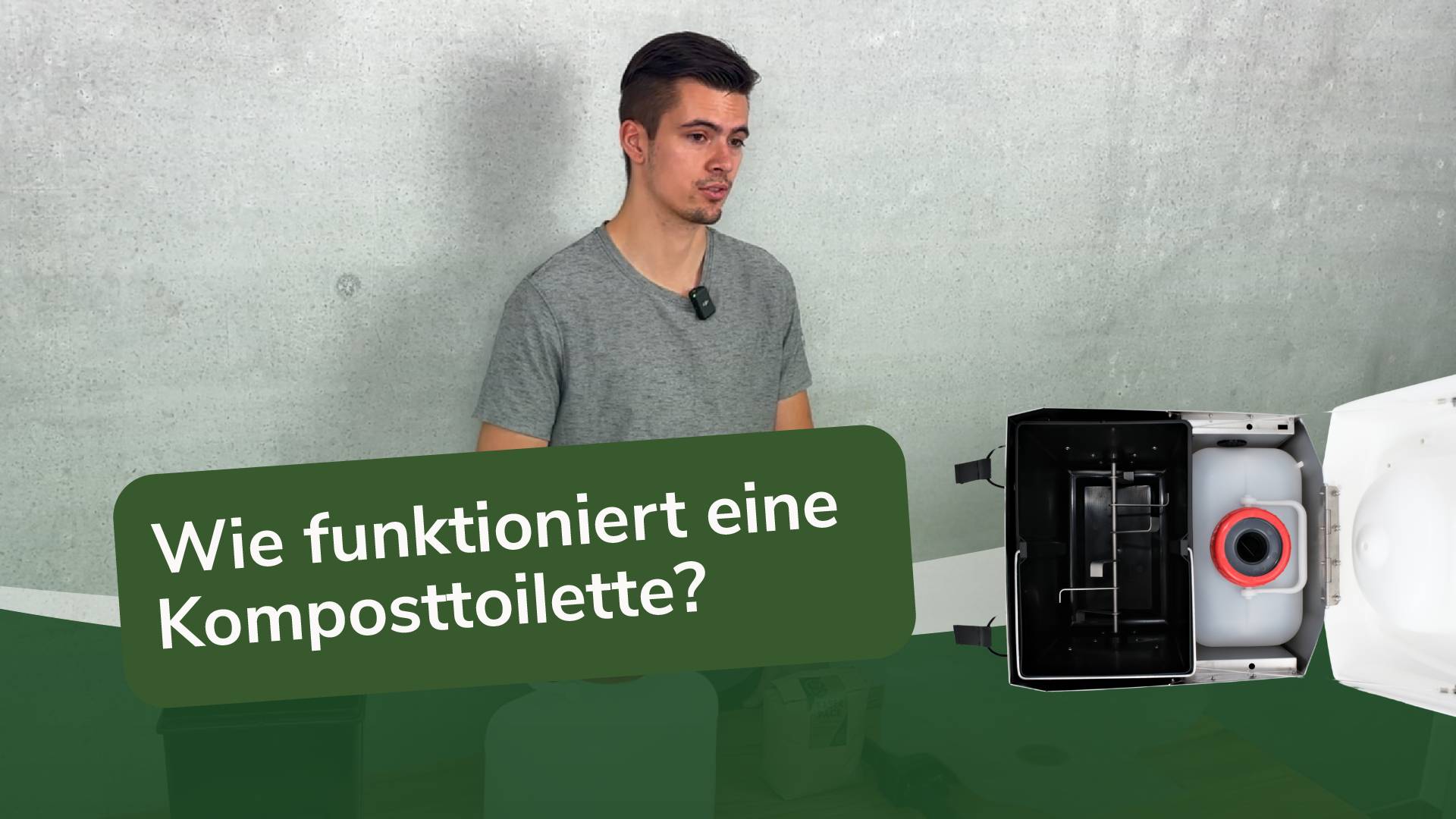
Video: How a Compost Toilet Works
In the video, you can see the composting version in action: urine is collected separately, solids go into the container with plant fibers, and the agitator distributes the contents. This turns the regular separation system into a composting toilet with a longer service life.
It is important to clearly distinguish: A BioTioo composting toilet is a dry separation toilet with a stirring mechanism. But not every dry separation toilet is automatically a composting toilet.
Why a stirring mechanism and coconut fibers?
In a composting toilet, the solid waste area should remain stable over multiple uses. This is exactly what the mixing mechanism and coconut fibers ensure together.
Stirring mechanism instead of just sprinkling
In a compost toilet, the solid waste area should remain stable over multiple uses. Simply covering it from above is not enough. Otherwise, solids would become damp in spots while the absorbent material only works on the surface.
Before use, the solid waste container is prepared with coconut fibers. After using the toilet, the stirring mechanism distributes solids, toilet paper, and fibers throughout the container. This prevents any single wet spot and creates a more even mixture within the dry structural material.
This is exactly where the mechanical advantage of the compost variant lies: it turns the solid waste container from a simple collection vessel into a system for drying, mixing, and pre-composting.
Why coconut fibers?
Coconut fibers are suitable for the compost variant because they absorb moisture, provide structure, and work in the solid waste container over a longer period. They are not just a cover from above. They form the material bed in which solids are distributed, kept drier, and prepared for pre-composting.
Coconut fibers are available both as space-saving, compressed coconut bricks and as ready-to-use coconut fiber refill.
For short bag use, this material logic is hardly worthwhile. Simple litter is often enough there because the contents are disposed of quickly. In the compost toilet, however, the plant fibers remain in the container over several uses. That is exactly when they show their strength.
| Component | Task in the system | Effect in everyday life |
|---|---|---|
| Agitator | distributes solids, paper, and plant fibers | Less manual refilling, more even mixing |
| Coconut fibers / plant fibers | bind moisture and provide structure | drier solid area, better pre-composting |
| Fan | removes moisture from the solid waste container | More stable drying, longer usage intervals |
| Urine separation | keeps liquid away from the solid area | Less odor formation, no wet mixture |
| Solid waste container | collects the pre-composting material | clean removal instead of chemical cassette |
The advantage is not a single component. What matters is the interaction: separation prevents wet mixing. Plant fibers absorb residual moisture. The agitator distributes everything more evenly. The fan supports drying.
Who is the composting option suitable for?
A composting toilet is worthwhile if the toilet is used regularly and the solid waste container needs to remain stable for several days. The key factor is not the installation location, but the frequency of use: the more often the toilet is used, the more important the agitator, plant fibers, fan, and longer retention time become.
This applies just as much in the motorhome as in the van, boat, garden house, or tiny house. But the location alone does not decide. What matters is whether you only use the toilet occasionally as a backup or if it is really used daily for several days in a row.
When the toilet is used daily
For daily use, the composting option is the more practical BioTioo solution. The solid waste container is not only filled and covered but actively mixed with plant fibers. The agitator evenly distributes solids, toilet paper, and coconut fibers throughout the container. The fan aids in drying.
This keeps the solid waste area easier to manage. You need to add less material manually, check less often, and don’t have to empty the container as frequently as with a simple bag solution. For occasional use, this isn’t necessarily required. For daily use, this exact mechanism makes all the difference.
When two people stay self-sufficient for several days
With two people, the load on the solid waste container increases quickly. What seems simple for a single use becomes a routine question after several days: How often does it need to be emptied? How dry does the content stay? How much litter needs to be refilled? How much manual work is required?
The composting version is designed exactly for this situation. Coconut fibers form the material bed in the solid waste container. The agitator distributes the contents. The fan removes moisture. This extends the intervals, so the toilet does not need constant active attention. If you regularly travel as a pair and don’t use the toilet only in emergencies, the agitator version is usually the more suitable choice.
If you want less solid waste handling
The composting option is also worthwhile if you want to reduce bag changes, adding cover material, and early emptying. With the BioTioo compost toilet, solids don’t go into a bag but into a solid waste container with a mixing mechanism. Before use, the container is prepared with coconut fibers. After that, the mixing mechanism distributes the material. Depending on the model, this is done manually with a crank or automatically with a motor.
The advantage isn’t that you never have to do anything again. The advantage is that the solid waste container requires less frequent active attention: fewer individual steps after each use, fewer bag changes, and more time between emptying.
When you decide between RL and RL-M
The key elements for the composting function are the agitator and plant fibers. The fan is not a requirement for this, but it makes operation more stable by removing moisture from the solid waste area. The difference lies not in the basic function, but in the operation.
The BioTioo 2.0 RL is the right choice if you want the composting version and prefer to operate the mixer manually with a crank. The BioTioo 2.0 RL-M is the more comfortable option if you want the motor to handle the mixing.
| Your usage | More sensible option | Why |
|---|---|---|
| You want the composting mechanism, but move the agitator without a motor. | BioTioo 2.0 RL | Agitator and fan, operated by hand crank |
| You want to operate it with as little active involvement as possible. | BioTioo 2.0 RL-M | Motorized agitator after closing the lid |
| You regularly travel as a pair | BioTioo 2.0 RL-M | fewer steps with frequent use |
| You want to remain completely independent of electronics. | BioTioo 2.0 R (RL without fan) | The pure stirring mechanism operated by hand crank; configured completely without a fan |
| You only use BioTioo occasionally. | BioTioo 2.0 B (simple dry separation toilet in bag mode) | The stirring mechanism and coconut fibers are then not necessarily required. |
When simple operation is enough
If you only use the toilet occasionally or need an emergency solution for specific situations, the composting option is not necessarily required. In that case, the dry separation toilet page is a better starting point.
This page is intended for users who want to use BioTioo as a regular travel or self-sufficient toilet.
Duration and Handling: Why You Need to Empty the Solid Waste Container Less Often
A composting toilet is not just about collecting solid waste. What matters is how the solid waste container remains stable over multiple uses.
In the BioTioo compost variant, solids, toilet paper, and plant fibers all end up together in the solid waste container. The agitator distributes the contents within the material bed. The fan can additionally remove moisture from the solid waste area. This keeps the contents looser, drier, and easier to handle than simply covering them.
This extends the service life. Depending on usage, temperature, fiber quality, and number of people, about 20 to 30 solid waste uses are possible with the compost variant before the container needs to be emptied.
This number is not a fixed promise. It depends on how often the toilet is used, how much toilet paper is added, how dry the material remains, and whether the fan is running. The key point is: the compost variant is designed for longer use, not for quickly changing individual bags.
What longer standing time practically means
Longer service intervals don’t mean you can ignore the toilet. It means the solid waste container needs less frequent active attention. You prepare the solid waste container with plant fibers. After that, you use the toilet as usual.
The agitator distributes new solids within the existing material. With the RL version, you operate the agitator manually with a crank. With the RL-M version, a motor mixes the contents after the lid is closed. This way, you don’t have to check, cover, or dispose of a bag after every use. The work shifts from many small tasks to less frequent, planned emptying.
Duration Factors
- Frequency of use: The more often the toilet is used, the faster the container fills up. A stirring mechanism is especially worthwhile with daily use.
- Number of people: Two people put significantly more strain on the solid waste container than one person. For couples, RL or RL-M is usually more practical than using bags.
- Plant fibers: Dry, loose material binds moisture and provides structure. Coconut fibers are the better choice for the composting version.
- Agitator: Distributes solids, paper, and fibers more evenly. Less localized moisture, less manual rework.
- Fan: Removes moisture from the solid waste area. Especially useful with frequent use, heat, and longer periods of inactivity.
- Toilet paper: More paper means more volume in the container. Paper can be added, but it affects the fill level.
Why the fan is useful, but does not define the composting toilet
For the composting function, the key components are the agitator, plant fibers, and the solid waste container. The fan is not a prerequisite for BioTioo to work as a composting variant.
However, it makes the operation more stable. Especially with regular use, the fan helps to draw moisture from the solid waste area. This supports drying, improves handling, and can make longer service intervals more reliable.
In short: The agitator turns the solid waste container into an active system. The plant fibers provide structure. The fan supports drying. Together, they create the comfort advantage of the BioTioo composting toilet.
Odor, fan, and drying
A compost toilet is not odor-free because it masks smells with additives. It tackles the problem earlier: the solid waste area should remain dry, airy, and separate from the urine.
Odor mainly occurs when liquids and solids mix, moisture cannot escape, and organic material stays wet. With BioTioo, urine is collected separately. The solids go into their own container with plant fibers. The agitator mixes the contents. The fan can remove moisture from the solid waste area.
This way, the odor is not masked. It is reduced at the source.
The stirring mechanism is not just a comfort feature. It distributes moisture throughout the material, preventing certain spots from staying wet. The fan is also not simply an "odor extractor." Its most important task is to remove moisture.
What the fan really does
The fan draws air out from the solid waste area. This allows moisture to escape more effectively. This is especially important when the toilet is used regularly, when it is warm, or when the solid waste container is in use for several days.
The fan does not replace the mixing mechanism. It also does not replace the plant fibers. It complements both. Without plant fibers, the contents lack structure. Without the mixing mechanism, the material is not evenly distributed. Without the fan, the system can still work, but with frequent use, drying becomes less stable.
For short or infrequent use, a simpler setup may be sufficient. For longer periods, the combination of mixing mechanism, plant fibers, and fan is the much more robust solution.
What reduces the risk of odors
Odor is prevented when the solid waste area remains dry and clean, separated from the urine. The risk increases especially at these points:
- The solid waste area is too moist.
- Too few or too wet plant fibers have been used.
- The mixer has been operated too infrequently.
- The fan is not running or the air cannot be properly vented.
- The urine compartment is not properly sealed.
- The solid waste container is full and should be emptied.
For stable operation, you plan this from the start: dry coconut fibers, a stirrer, a fan, and clean urine separation. No chemicals are needed.
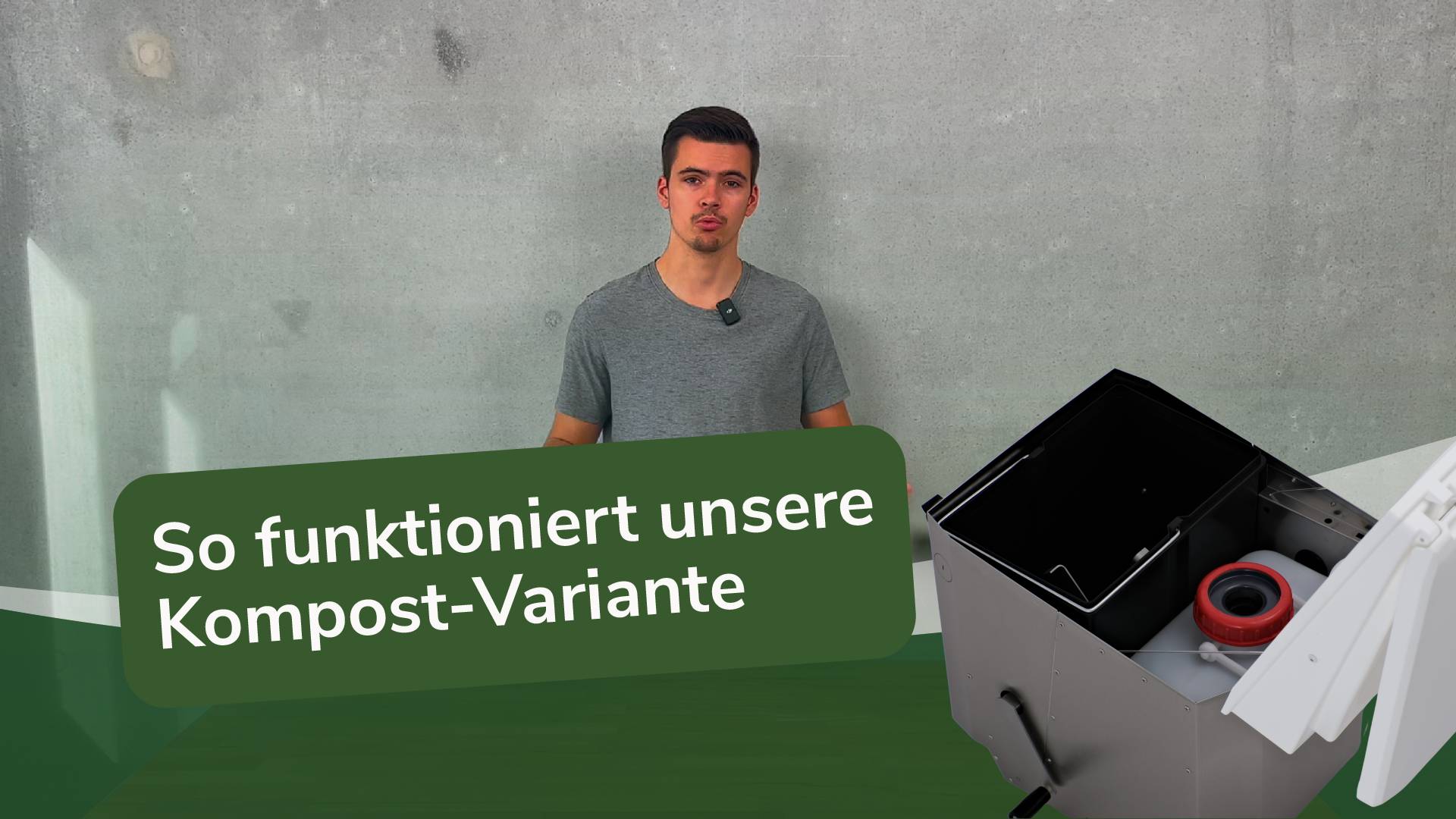
Video: Interaction of Stirrer & Fan
In the video, you can see why the composting version doesn’t just collect solids. The key is the interaction between plant fibers, the agitator, and drying. This is exactly what keeps the solid waste container stable for longer and much more pleasant to use daily.
Composting Honestly Explained: What Happens in the Container and What Doesn’t
A BioTioo composting toilet begins pre-composting in the solid waste container. This means solids are mixed with plant fibers, kept dry, and prepared for later composting. This is not the same as finished garden compost after just a few days.
Complete composting takes time, oxygen, and post-treatment outside the toilet. In the BioTioo container, the process only begins: the contents are pre-composted, drier, and easier to handle. Finished humus is created only through later maturation. This honesty is important. A compost toilet is not a small quick composter in the camper bathroom. It is a dry stirring system that collects solids more stably, reduces moisture, and makes later disposal or further composting much more pleasant.
What happens in the solid waste container
Coconut fibers lie in the prepared solid waste container. After use, the agitator distributes solids and toilet paper within this material. The plant fibers absorb moisture and keep the contents looser. The fan can also remove additional moisture to the outside.
This initiates a pre-composting process. The contents do not remain as a wet pile but are incorporated into a drier, more structured material bed.
This makes later emptying much more pleasant. The contents are not mixed with urine, not chemically treated, and do not need to be disposed of as liquid tank waste.
What should not be promised
A compost toilet doesn’t produce finished soil overnight. It also doesn’t take care of everything for you. And it won’t work better if the solid waste container gets too wet or if there isn’t enough structural material in the system.
Well formulated
- Pre-composting begins in the container.
- Plant fibers provide structure and moisture retention.
- The agitator distributes solids and paper more evenly.
- The fan supports the drying process.
- Finished compost is only produced through proper post-composting outside the container.
This is the difference between an honest composting system and an unrealistic advertising promise.
Disposal of solid waste
When the solid waste container is full or the stirring mechanism is largely covered, you should plan for emptying. Remove the solid waste container and place the contents into a suitable disposal container, such as an appropriate paper bag.
Depending on the situation, dispose of the contents according to local regulations or continue processing them at a suitable private composting site. It is important to note: the contents are not mixed with chemical sanitizers. It is not a liquid chemical tank but separated solid material mixed with plant fibers.
If you want to continue composting the contents, they require several months of post-composting outside the toilet. A detailed explanation of post-composting and safe use is included in the compost toilet guide. When in doubt, disposal according to local regulations is the cleaner solution.
The two disposal methods
Minimal. You remove the solid waste container and empty it; a complete wash is usually not necessary. Especially with the compost variant, a sterile container is not the goal; a dry, easy-to-handle container is more important.
If something is smeared or you want to clean the container for hygienic reasons, you can of course clean it. The key is that it is put back in dry and prepared with fresh plant fibers afterward.
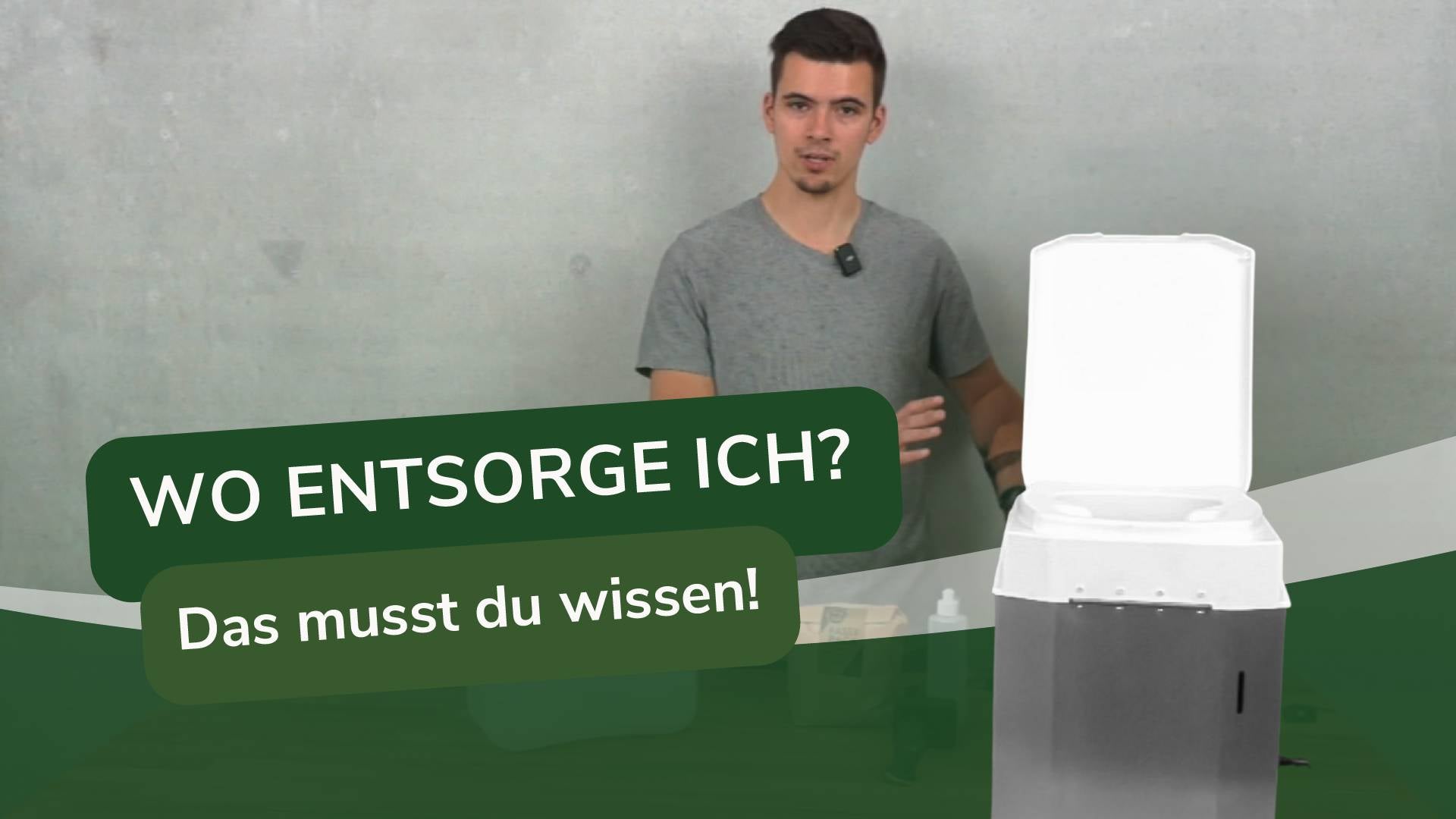
Video: Disposal & Emptying
The video is about emptying the composting version: when the solid waste container is full, how to remove it, and why the contents are not treated like a chemical cassette.
Comparison of Compost Toilet, Dry Separation Toilet, and Bag Toilet
The terms are often used interchangeably. However, the distinction is important for the purchasing decision.
A BioTioo composting toilet is a dry separation toilet with a stirring mechanism and plant fibers. It separates urine and solids like the basic system but treats the solids differently: not as a short-term bag collection, but in the solid waste container with a stirring mechanism, structural material, and pre-composting.
| System | Solid waste operation | Suitable for | Service life | Typical Handling |
|---|---|---|---|---|
| Simple dry separation toilet in bag mode | Solids go into a bag and are covered with litter. | infrequent use, standby operation, short startup | We sell composting and separating toilets for motorhomes, campers, and more in Germany. BioTioo offers modular, chemical-free sanitation systems: separating toilets collect solids in a bag, while composting toilets use a mixer with coconut fibers for continuous operation. | Insert the bag, cover it, and dispose of it promptly. |
| BioTioo Compost Toilet RL | Solids end up in the container with the agitator and plant fibers. | regular use, longer idle time, deliberate manual operation | longer | Prepare the container, stir with a crank, empty less frequently |
| BioTioo Compost Toilet RL-M | Solids end up in the container with a stirring mechanism, plant fibers, and motorized mixing. | frequent use, two people, maximum comfort | longer | Close the lid, the motor stirs automatically, the crank remains available as a fallback option. |
| Chemical toilet / cassette toilet | Urine, solids, water, and chemicals end up in a single tank. | classic camping toilet use with disposal stations | dependent on cassette | Carry the cassette, use chemical additives, empty at the station |
The most important difference
Simple bag toilet
The simple bag toilet is compact and straightforward. It collects solids in a bag and is disposed of more frequently.
BioTioo Compost Toilet
The BioTioo compost toilet is designed for extended use. It operates with a stirring mechanism, plant fibers, and a solid waste container that does not need to be changed after just a few uses.
Chemical toilet
The chemical toilet solves the problem differently. It collects everything together and relies on sanitary additives. BioTioo avoids exactly this mixture.
When each solution makes sense
Simple & rare
If you are just looking for a simple emergency toilet, the bag solution is sufficient.
Regularly & self-sufficient
If you use BioTioo regularly, want to stay self-sufficient for several days, or are traveling with a partner, the composting option is more practical.
Comfort & Operation
If you want to operate it with as little manual effort as possible, the RL-M is the most comfortable solution. If you prefer the same composting mechanism without motor control, the RL is a better fit.
Quick decision
| If you … | Then it fits better with … |
|---|---|
| use rarely and want to start as simply as possible | Dry separation toilet in bag mode |
| regularly use and want less bag handling | BioTioo 2.0 RL |
| often travel in pairs and want to operate with as little effort as possible | BioTioo 2.0 RL-M |
| You want to avoid a motor, but you want a stirring mechanism. | BioTioo 2.0 RL |
| You want motorized comfort but need a manual fallback. | BioTioo 2.0 RL-M |
| if you want to replace a classic cassette | BioTioo Compost Toilet Instead of Chemical Toilet |
Frequently Asked Questions about BioTioo Compost Toilets
What is a compost toilet at BioTioo?
What is a compost toilet at BioTioo?
A BioTioo compost toilet is the stirring mechanism version of the BioTioo system. Solid waste collects in the solid waste container with plant fibers, is distributed by the stirring mechanism, and kept dry. This initiates pre-composting, allowing the container to be used for a longer period.
Is a composting toilet the same as a dry separating toilet?
Is a composting toilet the same as a dry separating toilet?
Not exactly. Every BioTioo composting toilet is a dry separation toilet with a stirring mechanism. But not every dry separation toilet is automatically a composting toilet. A simple dry separation toilet can operate in bag mode. The composting version works with a stirring mechanism, plant fibers, and longer retention time.
Does a compost toilet need a stirring mechanism?
Does a compost toilet need a stirring mechanism?
At BioTioo, yes. The stirring mechanism is the key difference from simply sprinkling. It distributes solids, toilet paper, and plant fibers within the container. This keeps the contents looser, drier, and easier to handle.
Does a composting toilet necessarily need a fan?
Does a composting toilet necessarily need a fan?
The fan is not the defining feature of the composting toilet. What matters are the mixing mechanism and plant fibers. However, the fan is very useful because it removes moisture from the solid waste area and supports drying. For frequent use and longer periods of inactivity, it is definitely recommended.
Why are coconut fibers used?
Why are coconut fibers used?
Coconut fibers absorb moisture, provide structure, and remain in the solid waste container through multiple uses. They are not just a cover from above but the material bed in which solids are distributed and prepared for pre-composting.
Can I also use other plant fibers?
Can I also use other plant fibers?
Yes, basically other suitable plant fibers can also work. It is important that they are dry, structurally stable, and absorbent. For the compost variant, coconut fibers are particularly suitable because they bind moisture well and can work in the container for a long time.
How often do I need to empty the solid waste container?
How often do I need to empty the solid waste container?
Depending on usage, about 20 to 30 solid waste uses are possible. The actual service life depends on the number of people, toilet paper, temperature, humidity, amount of fibers, and use of the fan.
Does finished compost form in the toilet?
Does finished compost form in the toilet?
No, not after just a few days. Pre-composting begins in the container. Finished compost is only produced after a longer curing period outside the toilet container. The BioTioo composting toilet makes the contents drier, more structured, and easier to handle, but it does not replace a complete compost pile.
Can toilet paper be put into the solid waste container?
Can toilet paper be put into the solid waste container?
Yes, toilet paper can be placed in the solid waste container. However, it increases the volume and thus affects the service life. The agitator helps to better distribute paper and solids within the material bed.
Does the RL-M need electricity?
Does the RL-M need electricity?
The RL-M uses electricity for the motorized agitator and the TiooTronic control system. However, basic operation remains guaranteed: if you don’t want to use electricity or something fails while on the road, you can remove the motorized unit and operate the agitator manually with the crank.
What is the difference between RL and RL-M?
What is the difference between RL and RL-M?
The BioTioo 2.0 RL is the manual composting version with a stirring mechanism and fan. You operate the stirring mechanism using a crank.
The BioTioo 2.0 RL-M is the motorized version with TiooTronic and crank fallback. It stirs automatically after the lid is closed but can still be used with the crank.
When is the bag mode sufficient?
When is the bag mode sufficient?
The bag mode is sufficient if you only use the toilet occasionally, are looking for a simple backup, or want the easiest possible start. Once BioTioo is used regularly and the solid waste container needs to remain stable for longer, the compost variant with a stirring mechanism is the better solution.
Can I upgrade later?
Can I upgrade later?
BioTioo is modular. Depending on the configuration, you can switch from the basic operation to the stirring mechanism version and expand existing systems. Technical requirements apply to the RL-M because the motor and control must match the toilet bowl generation.
Next step: Choose a BioTioo compost toilet
If you want a stirring mechanism, plant fibers, a fan, drying, and longer service life, the compost variant is the right choice for you.
Serve few
-
View BioTioo 2.0 RL-MThe BioTioo 2.0 RL-M is the more comfortable composting toilet. The TiooTronic automatically operates the agitator after the lid is closed, while the crank remains available as a backup option.
Stay manual
-
View BioTioo 2.0 RLThe BioTioo 2.0 RL is the manual compost toilet with a stirring mechanism and fan. It’s perfect if you want the composting system but prefer to do without motor control.
Learn more
-
View dry separation toiletsThis is about the BioTioo basic system: separation, bag mode, modularity, and later upgrades.
-
Read the compost toilet guideThe guide explains composting, post-composting, application areas, and biological background in more detail. This collection deliberately stays close to the purchase.
In short
The BioTioo 2.0 RL is the manual compost toilet with a stirring mechanism and fan.
The BioTioo 2.0 RL-M is the motorized compost toilet with TiooTronic and crank fallback.
If you use BioTioo regularly, want to stay off-grid longer, and handle less solid waste, the compost variant is the right choice.