



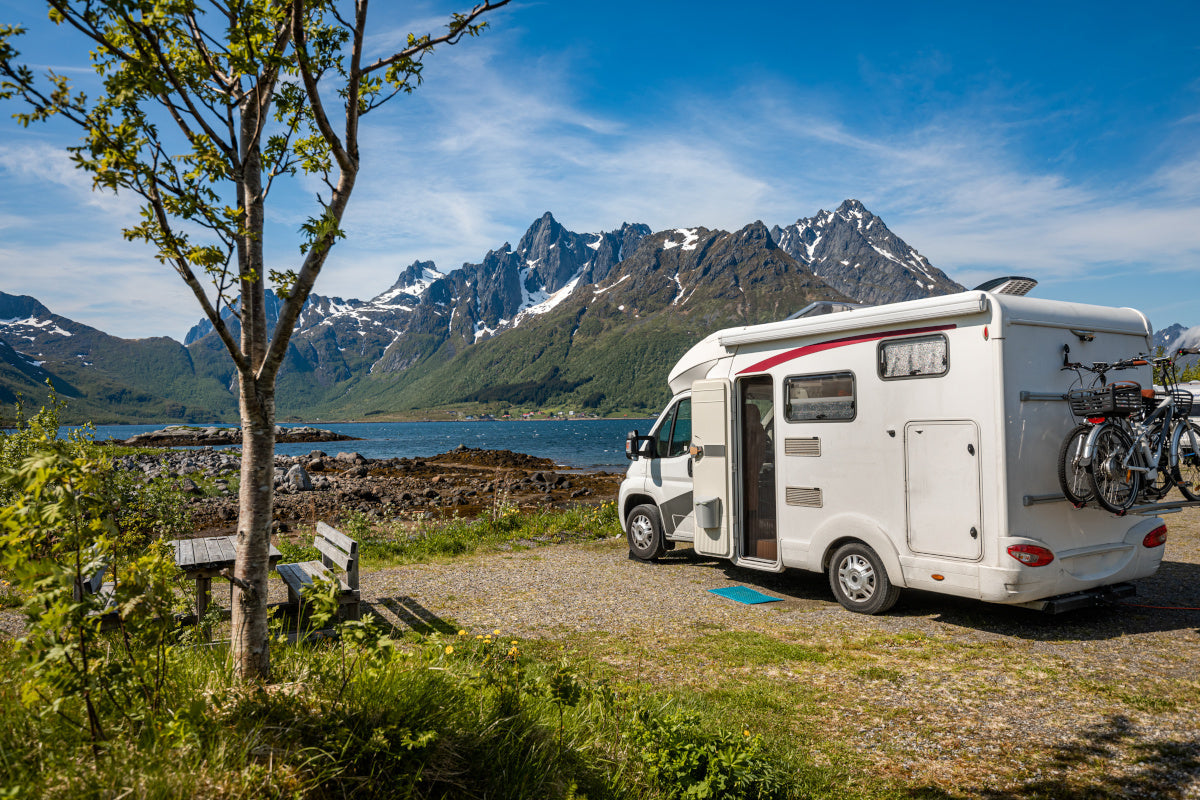
An ecological toilet is the sustainable alternative to the classic flush toilet. It works completely without water, chemicals, or connection to the sewer system. Whether in the garden, holiday home, campsite, or motorhome: with an environmentally friendly toilet solution, you are independent everywhere while conserving valuable resources. In this article, you will learn everything about the different types of ecological toilets, their advantages, and what to consider when buying.
What is an ecological toilet?
The term ecological toilet describes various toilet systems that operate without water flushing and minimize environmental impact. Unlike conventional toilets, no feces enter the wastewater here but are collected and processed directly on site.
Ecological toilets include, among others, the dry toilet, the composting toilet, and the dry separation toilet. They all have one thing in common: they operate without water, are environmentally friendly, and allow autonomous use in places without water connection or sewage system.
The basic principle is simple: instead of flushing waste away with water, it is collected in a container. Depending on the type of toilet, urine and solids are separated or collected together. By avoiding water, you not only save valuable resources but also significantly reduce the effort for disposal.
These types of ecological toilets exist
Depending on the area of use and personal requirements, you have various ecological toilets to choose from. Here you will find an overview of the most common models.
Dry separation toilet
The dry separation toilet is the most popular variant among ecological toilets. It features a special separation insert that separates urine and solids. The urine flows into a separate canister, while the solid waste ends up in its own collection container.
This separation prevents ammonia from forming and greatly minimizes odor. With optional accessories such as litter, a fan, or an exhaust system, the toilet becomes even more hygienic.
Advantages:
- Comes without water, chemicals, or electricity
- Hardly any odor formation due to separation system
- Very environmentally friendly and sustainable
- Easy cleaning and handling
- Low maintenance and durable
Disadvantages:
- Higher purchase price than chemical toilets
- Installation should be carefully planned
- Solids must be disposed of separately
Compost toilet
The compost toilet uses natural composting processes to convert excretions into valuable humus. Before first use, the solid waste area is filled with bedding such as coconut fibers or bark mulch.
These materials bind moisture, reduce odors, and support natural decomposition. Depending on the model, compost toilets have an agitator, a fan, or a heater that accelerates the process. After a few months, finished compost is produced that can be reused as fertilizer.
Advantages:
- Produces valuable humus for the garden
- Operates completely without chemicals
- Especially ecological through circular economy
- Perfect for garden enthusiasts
Disadvantages:
- More prone to odors without a separation system
- Composting requires some attention
- Use as fertilizer is subject to legal restrictions
Humus toilet
The humus toilet is a special type of compost toilet. It converts human waste into useful humus through natural processes. Technical aids such as agitators and exhaust pipes are often used to ensure optimal evaporation and ventilation.
The finished humus usually only needs to be removed once or twice a year. Humus toilets are especially common in Scandinavian countries and are ideal for holiday homes and rural areas without water connections.
Advantages:
- Rare emptying required
- Fully automatic composting
- High-quality humus as end product
- Proven technology
Disadvantages:
- Partially requires electrical connection
- Higher initial costs
- Maintenance of agitator and heater required
Chemical toilet in comparison
Unlike the mentioned ecological alternatives, the chemical toilet uses chemical additives to mask odors and break down feces. It is inexpensive to purchase but neither environmentally friendly nor sustainable.
Disposal may only be carried out at special disposal stations. In many allotment garden associations, chemical toilets are also only permitted to a limited extent or not at all.
Advantages:
- Inexpensive to purchase
- Widespread
- Flexible in use
Disadvantages:
- Chemicals are harmful to the environment
- Disposal only possible at special stations
- Often strong odor formation
- Regular refilling of chemicals necessary
Advantages of an ecological toilet
An ecological toilet offers numerous advantages over conventional flush toilets and chemical toilets. The most important aspect is certainly environmental protection: Since no water is used and no chemicals are involved, you conserve valuable resources and do not burden groundwater or the sewer system.
Added to this is independence: You do not need a water connection, no pipes, and depending on the model, no electricity either. This makes ecological toilets perfect for self-sufficient living and traveling.
By separating urine and solids or using litter, modern ecological toilets operate almost odor-free. A good exhaust system further enhances this effect. The result: hygienic toilet visits without unpleasant surprises.
Last but not least, many ecological toilets are particularly low-maintenance and durable. After the one-time purchase, there are hardly any ongoing costs, and disposal is much easier than with chemical toilets.
Areas of application for ecological toilets
Ecological toilets are versatile and suitable wherever there is no connection to the sewer system or where you want to live particularly sustainably.
Typical areas of application are:
- Garden and allotment garden: Flush toilets are usually not allowed here. A dry separation toilet offers the perfect alternative.
- Holiday home and garden shed: Especially in remote areas without water connection, ecological toilets are ideal.
- Motorhome and caravan: For self-sufficient camping without dependence on disposal stations.
- Boat and sailing yacht: Compact onboard toilets save space and work reliably at sea.
- Tiny house and alternative living forms: For sustainable, minimalist living without extensive infrastructure.
- Rural areas and ecotourism sites: Wherever environmental protection is a priority.
What to look for when buying
Before you decide on an ecological toilet, you should consider some important points. This way, you will find the model that perfectly suits your needs.
- Material and quality: Look for a robust housing made of durable materials such as stainless steel or high-quality plastic.
- Size and dimensions: Check if the toilet fits in the intended space and if the seat height is suitable for all users.
- Container volume: The larger the collection container and urine canister, the less often you need to empty them.
- Separation system: Good urine separation minimizes odors and makes disposal easier.
- Ventilation: An integrated exhaust system or the option to retrofit a fan ensures odorlessness.
- Cleaning: Smooth surfaces and easily accessible components facilitate hygiene.
- Accessories and spare parts: Check if suitable accessories such as litter, bags, and spare parts are available.
Disposal and hygiene with ecological toilets
Disposing of an ecological toilet is straightforward as long as you follow a few simple rules. In a dry separation toilet, urine is collected in a separate canister and can either be diluted and used as fertilizer in the garden or disposed of via the regular toilet.
The solids end up in the collection container, are covered with litter, and can then be composted or disposed of with residual waste. When using compostable bags, disposal is especially hygienic and possible without direct contact.
For cleaning, lukewarm water with mild detergents is usually sufficient. Aggressive chemicals are neither necessary nor desired. To keep the toilet odor-free permanently, you should also ensure good ventilation.
BioTioo: Ecological separation toilets for every application
BioTioo separation toilets combine sustainability, comfort, and hygiene in a well-designed system. They operate completely without water and chemicals, are particularly easy to clean, and are perfect for the garden, motorhome, boat, or holiday home.
Thanks to the compact design, BioTioo separation toilets also fit into small spaces, while the well-thought-out ventilation and separation system ensures an almost odor-free use. You can choose between different models:
- BioTioo 2.0: The comfortable successor to our BioTioo 1.0 with an improved seat and even easier cleaning.
- BioTioo 2.0 RL-M: The premium version with an electric motor for maximum comfort.
All models are made of robust stainless steel with a cold-impact resistant plastic bowl, making them particularly hygienic and durable. With BioTioo, you choose an ecological toilet that is sustainable, low-odor, and especially easy to maintain.
See for yourself and discover the ecological toilets from BioTioo now!

