


Separation toilets are a sustainable alternative to the traditional sanitary system, but they come with their own challenges. It becomes especially unpleasant when disturbing odors arise.
This article explains why a separation toilet can smell, which factors promote the toilet’s odor, and which measures can permanently prevent smells.
What causes the separation toilet to smell?
A separation toilet smells when odor-producing processes inside proceed unhindered. The following factors cause the unpleasant smell.
- Formation of urine scale
- Storage of urine over a long period
- Condensation moisture with closed lid
- Moisture in the solid waste area
1. Formation of urine scale
The reaction between uric acid and lime-containing tap water leads to the formation of urine scale. Urine scale is a yellow-brown, hard deposit that settles on inner surfaces.
Urine scales are difficult to remove and retain odor substances that gradually evaporate. Their porous structure also provides an ideal breeding ground for bacteria, which further intensify the stench.
2. Storage of urine over a long period
If urine remains in the container too long, it begins to rot. Ammonia is produced in this process. Ammonia has a sharp, room-filling smell. High temperatures and poor ventilation accelerate this process. Without regular emptying, the smell becomes increasingly intense.
3. Condensation moisture with closed lid
A permanently closed lid, without using a fan, prevents air circulation – condensation water forms. This damp environment promotes microorganisms that produce strongly smelling gases. The musty, moldy smell is reminiscent of a damp cellar and burdens the entire toilet system.
4. Moisture in the solid waste area
Moisture in the solid waste container, for example due to incorrect separation of urine and solids, leads to anaerobic decomposition. This produces foul gases that cause a strong, unpleasant odor and impair the composting process.
Which measures help against a smelly separation toilet?
The stench in a separation toilet can be prevented if cleaning and ventilation measures are consistently carried out.
The following methods reliably help against odors.
- Regular emptying of the urine canister
- Cleaning with acidic or microbially active agents
- Mechanical cleaning with pebbles
- Installation of an odor trap
- Moisture management through ventilation
1. Regular emptying of the urine canister
Emptying the canister every two to three days significantly reduces ammonia-containing gases. Timely emptying prevents rot and results in less odor formation.
2. Cleaning with acidic or microbially active agents
Diluted vinegar essence (1:7) or citric acid dissolve urine scale and have a disinfecting effect. Alternatively, pH-neutral cleaners with microorganisms are suitable, which biologically break down odor-active substances and prevent new sources of odor.
Extra tip: A little washing powder or a dishwasher tablet in the tank, left to act for 24 hours, thoroughly removes urine scale and ensures lasting freshness.
3. Mechanical cleaning with pebbles
Pebbles in the canister, shaken vigorously, loosen stubborn residues. This simple measure removes dirt films that often cause foul odors.
4. Installation of an odor trap
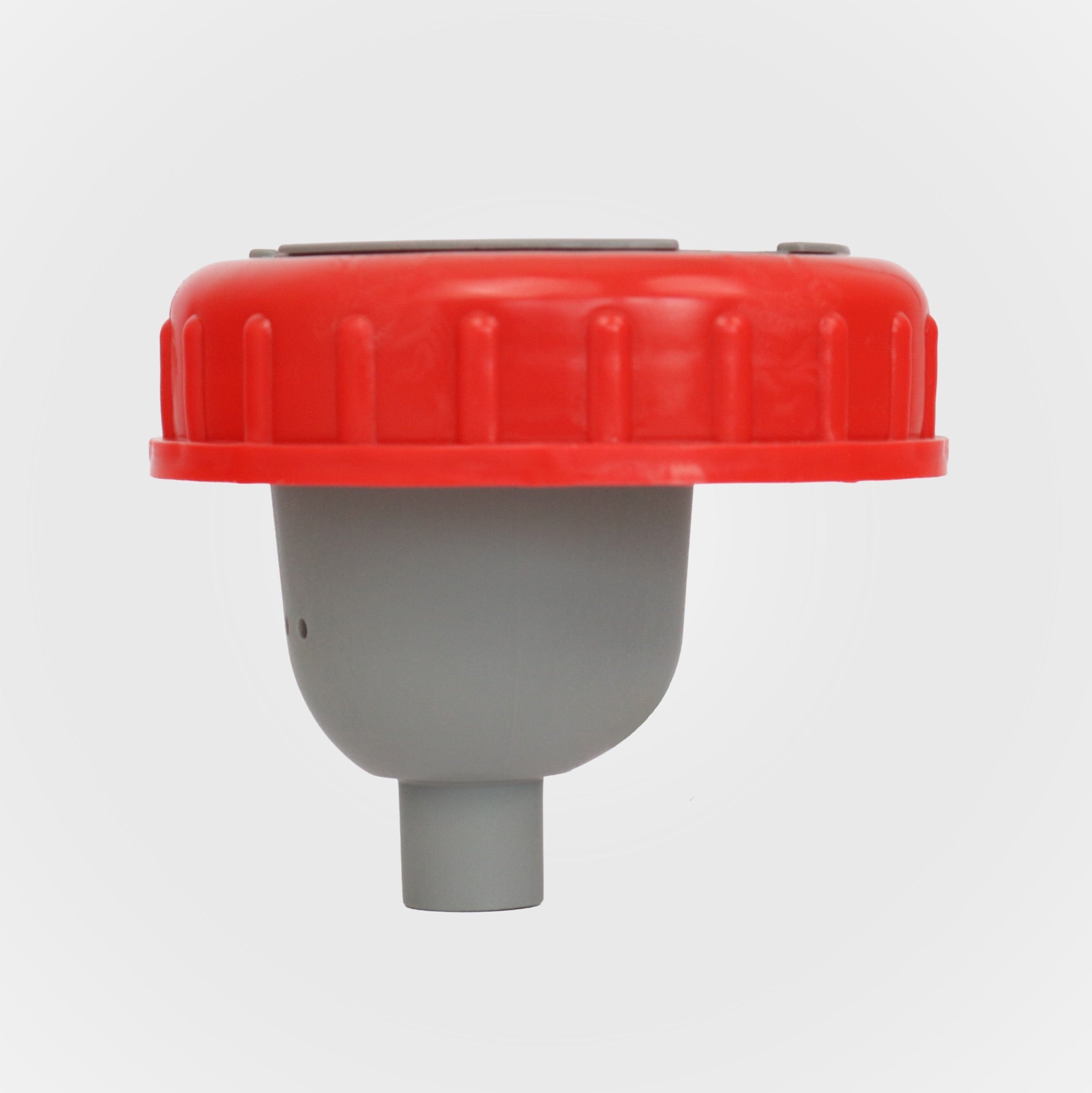
An odor trap such as a siphon or a silicone membrane prevents vapors from escaping the canister. This reduces the odor burden.
Additionally, we have developed our own patented odor trap that fits most urine canisters of separation toilets. Unlike a silicone membrane, it does not stick over time but reliably and, above all, permanently prevents odors.